Updated May 2026 — Expert Tested
The 3 Best Telescopes
for Beginners This Year
We spent 80+ hours testing 24 telescopes. Here's exactly what to buy — and what to skip.


We spent 80+ hours testing 24 telescopes. Here's exactly what to buy — and what to skip.
These are the only three we'd actually recommend to a friend buying their first telescope.
"Set it on Saturn and walk away — it tracks all night without a single adjustment from you."
The gold standard for beginners who want to grow into astronomy seriously. The motorized GoTo mount automatically finds and tracks 40,000+ celestial objects — no astronomy knowledge required to get started.
🔗 Affiliate link — we earn a commission at no cost to you
"Uses your smartphone to automatically find thousands of stars and planets — perfect for beginners who want GoTo views without the GoTo price."
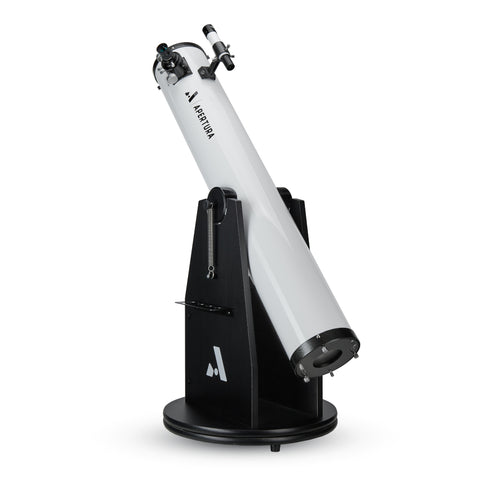
A Dobsonian reflector that punches well above its price. The 6-inch aperture delivers stunning views of the Moon, Jupiter's cloud bands, and deep-sky objects — at half the price of a GoTo scope.
🔗 Affiliate link — we earn a commission at no cost to you
"Our pick for any parent who wants their kid hooked on the night sky by their first night out."
The best entry-level telescope for kids or total beginners in 2026. Solid fully-coated optics, no-tool quick setup, and now includes Celestron's Starry Night Software — everything you need right out of the box.
🔗 Affiliate link — we earn a commission at no cost to you
Even a beginner telescope reveals breathtaking views. Here's what to expect on your first few nights out.


Everything you need to compare at a glance before you decide.
| Feature | Celestron NexStar 5SE | Celestron StarSense Explorer 150AZ | AstroMaster 70AZ |
|---|---|---|---|
| Price | $649+ | $329+ | $89+ |
| Aperture | 5 inches (127mm) | 6 inches (150mm) | 2.75 in (70mm) |
| Mount type | GoTo Computerized | Dobsonian Manual | Alt-Azimuth Manual |
| Auto-tracking | Yes ✓ | No | No |
| Object database | 40,000+ objects | None | None |
| Setup time | ~10 min | ~5 min | ~3 min |
| Portability | Medium | Low (bulky) | High |
| Best for | Serious beginners | Visual deep-sky | Kids / first night |
| Our rating | ★ 4.9 / 5 | ★ 4.6 / 5 | ★ 4.3 / 5 |

Four things to know before you spend a dollar — from someone who's tested two dozen of them.

The aperture — the diameter of the main lens or mirror — determines how much light your telescope gathers. More light means sharper, brighter, more detailed images. For beginners, aim for at least 70mm on a refractor or 5 inches on a reflector. This is the single most important spec to look at.
Cheap telescopes marketed with "600x magnification!" are almost always a bad buy. High magnification without quality optics gives you a brighter blur, not a clearer image. Any reputable astronomer will tell you: aperture and optical quality matter far more than the number printed on the box.
A wobbly tripod ruins a great viewing session even with perfect lenses. If your budget allows, a motorized GoTo mount is a genuine game-changer for beginners — it automatically tracks objects as they move across the sky, so Saturn stays in your eyepiece all night instead of drifting out every 30 seconds.
A $1,500 telescope that's too complex or heavy to drag outside sits in a closet. A $200 scope you use every clear night teaches you more about the sky in a month than any spec sheet. Match the telescope to your real lifestyle — if you want quick setup and minimal fuss, prioritize portability over raw power.
Our top pick is the Celestron NexStar 5SE for most beginners — but any of the three above will give you years of incredible nights under the stars.